


Commercial Use Outdoor Furniture: Essential Tips for Hotels

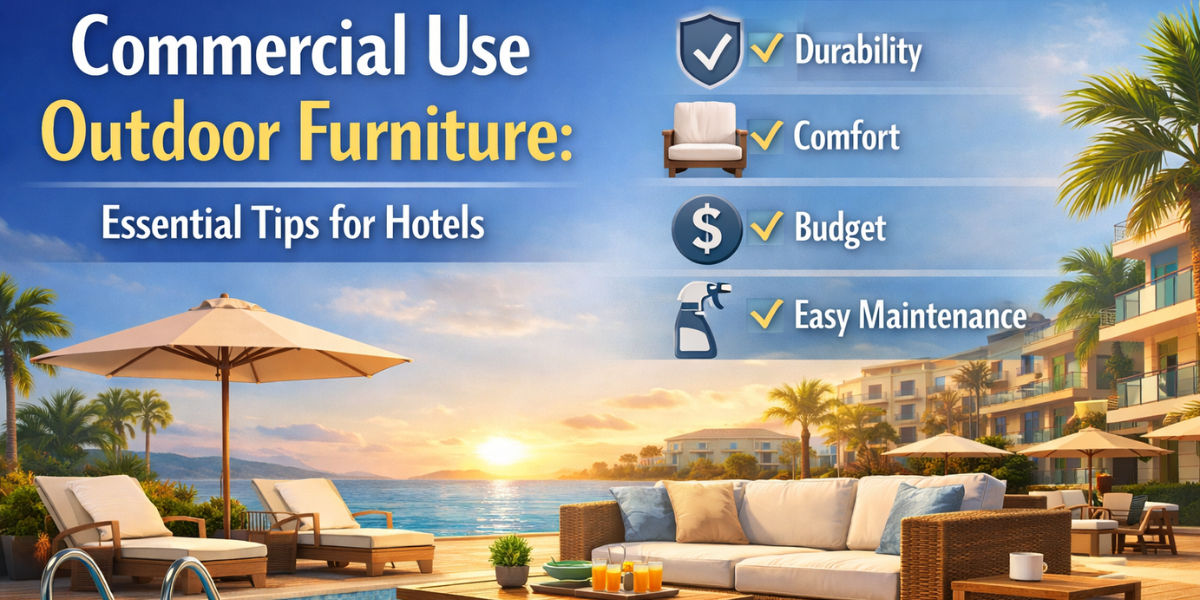
Commercial Use Outdoor Furniture: Essential Tips for Hotels
Outdoor areas are no longer boring, extra spaces for hotels. They have become profit-generating spaces. Spaces such as rooftop bars, patios, pool decks, and beach lounges are integral to positioning the brand and experience for your guests. Designing these spaces is more than simply picking out some nice chairs and tables. Hotel outdoor furniture will endure all weather conditions, heavy wear and tear, constant need for cleaning, and high traffic.
Commercial use outdoor furniture for hotels is a different category. Purchasing outdoor furniture is a different process than residential and even indoor hospitality furniture. In this guide, we breakdown the most important, experience-driven commercial outdoor furniture purchasing tips hotels need to follow, balancing operational performance, brand-building, and sustainable ROI.
What Will Learn
- Construction, materials, and techniques that last outside
- How to avoid common pitfalls for commercial outdoor furniture in hotels
- The best ways to evaluate suppliers, warranties, lifecycle costs, and return on investment for hoteliers
- India and comparable regions unique climate consideration
- Proven buying tips and strategies from top hospitality operators
- Why Outdoor Furniture Is a High-Risk Category for Hotel?
Why Hotels Need to Be Careful About Buying Outdoor Furniture?
Compared to most indoor hotel furniture, outdoor furniture will face harsher conditions. Every day outdoor furniture will face sunlight, rain, dust, fluctuating temperatures, and even will be moved around. For hotels, the risk increases because there will be more people using the furniture, staff will move it around and there will be too many cleaning schedules.
When some hotels buy outdoor furniture, they look at the price and how it looks and it leads to mistakes. Problems will appear after the first or second season of use. the finish will fade, the frame will rust, leaves will sag, the wood will crack, and the joints will become loose. When looking to buy replacement outdoor furniture, the costs will be greater than the savings from the first furniture.
Outdoor furniture, in hospitality procurement analyses, is expensive to replace in a short time frame, more so than most other items. It’s easy to assume that choosing cheap outdoor furniture and having to replace it frequently is an operational cost. Furniture is not only a decor purchase, it’s a operational investment.
Commercial vs. Residential Outdoor Furniture: What Hotels Gets Wrong
The commercial hotels need to understand that residential outdoor furniture is not meant to be used in hospitality settings. Even high-end residential brands tend to only test their products for ‘occasional’ use, not for full, almost round-the-clock use (12-16 hours per day).
That’s because the construction of commercial outdoor furniture is very different. The frames are more robust, the welds are reinforced, the joints are mechancially fixed (instead of glued), and the finishes are subjected to more rigorous testing for things like UV and salt and moisture exposure. The fabrics have higher abrasion resistance, are tested for mold and UV fading, and generally have more stringent colorfastness requirements.
Hotels that don’t realize they are buying residential-grade furniture typically notice structural failures within months. This not only creates maintenance challenges but also creates safety issues and increases the likelihood that guests will leave negative reviews.
Hotel Outdoor Use Zones
Prior to selecting a piece of furniture, hotels need to consider what each outdoor space will be used for. A poolside area functions differently than a rooftop bar or a garden dining area.
Furniture by the pool is permanently subjected to water, chlorine, sunscreen oils, and wet customers. Loungers and side tables in these areas need to be made of quick-dry materials and corrosion resistant frames. Beach hotels deal with salt air which hastens corrosion of metals and deterioration of fabric.
Restaurant terraces need furniture for long sitting spans and are conducive to frequent maintenance. Rooftop lounges are more about the ambience and the comfort, but also have to consider wind and extremes in temperature.
Successful hotels customize furniture specifications to use intensity instead of employing a one-size-fits-all strategy.
Picking Appropriate Materials For Outdoor Commercial Furnishings
The choice of material has a significant effect on how long outdoor furniture will last.
Aluminum is probably the most widely used choice of hotel outdoor furnishings due to rust resistance, light weight and strength when fabricated into commercial standards with Powder Coated aluminum frame materials in high humidity/climate proximity to oceans/coastal environments.
Stainless steel may be considered an option for upscale hotel properties, but should be chosen only in the case marine-grade stainless steel will be used when used in coastal/poolside applications. Lower grades of stainless steel will react negatively in outdoor environments and thus are more susceptible to failure.
Synthetic wicker made with high-density polyethylene (HDPE) provides UV resistance and flexibility when compared to PVC-based synthetic wicker products, which tend to become brittle and fade quickly after constant exposure to the sun.
Solid Woods, such as Teak wood continue to be popular in high-end hospitality applications to take advantage of their natural oil content and weather resistant properties. Teak does require maintenance and should only be selected by hotels who will commit to periodic oiling and/or controlled aging.
Clear plastic/resin should be approached carefully; commercial grade polypropylene (with uv stabilizers) provides moderate performance for less demanding commercial applications; molded plastic products purchased at discount prices tend to crack and lose pigmentation quickly when used as part of hotel furnishings.
Outdoor Fabrics Are Where Hotels Are Losing Money
Failure of outdoor upholstery is one of the most commonly encountered issues with hospitality businesses. Fabrics that appear to be high quality when in the showroom typically deteriorate very quickly when exposed to outdoor elements such as sun, moisture and repeated washing.
When selecting fabric for outdoor use, hotels should specify solution dyed acrylic or olefin fabrics that have been specifically made for outdoor applications. Because the color is embedded in the fiber, as opposed to being an applied dye, these types of materials have a much greater degree of resistance to fading.
When selecting foam for any application, it is just as important (if not more so) than selecting the appropriate type of fabric. Selecting a quick drying open cell foam will allow water to drain out rather than accumulate in the foam itself. The application of standard indoor foam will result in the water being retained in the foam causing odors, mold growth and structural failure.
Quality Construction: A Hidden Factor in Making or Breaking a Deal
There are two identical-looking outdoor chairs, yet they can each last for a vastly different amount of time due to the quality of their construction. There are multiple factors: whether or not the joint is welded, the thickness of the frame, the type of fasteners (being corrosion resistant), and how the chair is internally reinforced all help determine how long the furniture will last (3 years vs 10).
Commercial outdoor furniture should only have joints that are welded or mechanically fastened (and never glued). If a bolt/screw is being used, it should either be made of stainless steel or coated in some way to prevent corrosion.
When a hotel procures furniture, they should require construction details (not just photocopies of items from a catalog). Good manufacturers will provide technical specifications and test data on request.
Environmental Exposure and Weather Resistance Cannot be Ignored
Many hotels overlook the severity of environmental exposure factors, which usually cause products to wear down quicker due to the harshness of weather conditions. The combination of monsoon rains, a high UV index, dust storms and temperature extremes creates a very challenging environment for products in places like India.
When selecting powder coat finishes, UV protection must be verified through standard test processes and not just by the manufacturer’s marketing claim. When choosing fabrics, they should be classified for “outdoor use” and meet acceptable minimum standards for lightfastness.
Safety and Guest Experience
The risks caused by outdoor furniture failures can create both personal and property damage. On the one hand, unstable chairs, cracked loungers, and sharp edges can lead to guest injury, and liability claims on the other hand, outdoor furniture can also pose an injury risk and generate liability claims.
To ensure a high level of safety for guests, commercial manufacturers perform stability and load testing on their furniture. From a guest perspective, comfort is critical. When outdoor seating is poorly designed, guests will spend less time at the bar or restaurant, directly affecting potential revenue. Leading hotels also test the ergonomics of their furniture in addition to its aesthetics.
Climate-Specific Factors to Consider
Hotel owners in India encounter specific challenges. These encompass a range of environmental conditions; humidity, rainfall, heat, and dust expose hotel/building materials and finishes to multiple forms of weathering.
For properties located on the coast, it is essential that steel be protected from corrosion and that only pre-treated steel be used. For properties in northern climates, consideration should be given to using UV-stable finishes and fabrics to stay cool to the touch.
Hotels that utilize outdoor spaces year-round must plan for storing and covering furniture and fixtures to prepare for seasonal weather changes. Protecting good quality furniture off-season adds an enormous benefit to the value of the furniture.
Supplier Selection is More Important Than The Product Itself
Selecting the best supplier is as important as selecting the best furniture. Suppliers that are specifically in the hospitality industry and not just generic furniture suppliers, will be knowledgeable about timelines, scheduling, installation coordination, and after sale support services.
Suppliers should be able to provide project references as evidence of performing similar projects for hotels. In addition, the quality of supplies used in the project must also include warranties that define coverage for structural defects.
the degradation of finishes associated with the furniture used in the hotel, and the performance of fabrics used to cover the furniture supplied to the hotel. Hotels should also evaluate the availability of spare parts. Chairs, cushions, and table tops are items subject to wear.
Long-Term Considerations: Price Vs Value
The price of outdoor furniture can be misleading. A low initial purchase price can result in much higher total costs over the life of the furniture when you factor in replacement, repairs and disappointment from guests.
When evaluating outdoor furniture for hotels, the lifecycle cost (total cost of ownership) should be the main consideration. Furniture that lasts 8-10 years with very little upkeep will be far more cost effective than replacing the same furniture 2 times every year.
Procurement teams with experience will often conduct a little trial run of a style of furniture at one property before doing a full installation at all properties. This “trial run” will show procurement teams the real problems that cannot be seen in just visiting a showroom.
Strategic Maintenance Plan
Every piece of outdoor furniture requires some level of upkeep. Hotels should take into account the cleaning schedule, approved cleaning products, and staff training when making purchasing decisions.
Some finishes deteriorate after being cleaned with abrasive cleaning products. Some fabrics require that they be washed according to a specific washing routine. Requesting clear maintenance instructions from your furniture supplier will help ensure that you do not unintentionally damage the product and extend its lifespan. You should document and distribute this maintenance plan to your housekeepers and engineering team on day one.
Sustainability and Compliance
Sustainability is becoming a key factor in hotel procurement decisions. Sustainability has now been requested by guests, corporate clients, and brands as a part of their sourcing.
Outdoor furniture made from recycled aluminum, FSC-certified wood and low VOC finishes align with our commitment to sustainable products. Durable outdoor furniture inherently promotes sustainability by reducing the frequency of replacement. Hotels should request applicable sustainability documentation and certifications.
Mistakes Common for Hotels to Avoid
The most prevalent error is to purchase only by what can be seen in a showroom. Another is to combine both commercial and residential style furniture in the same area, which will create uneven wear.
Costly mistakes are caused by not considering warranty details, the lack of testing samples, and not accounting for exposure to the local environment. Hotels that are successful treat the procurement process of their outdoor furniture as a technical issue rather than purely a decor issue.
Questions Frequently Asked
Q1. What type of furniture is appropriate for commercial use in an hotel outdoor space?
Furniture designed for commercial use has been specifically designed to hold up under repeated usage and exposure to the weather and meet safety requirements; whereas furniture designed for home use has not.
Q2. How long should a hotel use commercial-grade outdoor furniture?
By using the right selection of outdoor furniture and maintaining the outdoor furniture correctly, high-quality outdoor furniture will give a minimum of 7 to 10 years of service in the hospitality sector.
Q3. Is the best type of material for outdoor furniture in hotels teak?
Teak is very suitable for outdoor use, but the owner will have to continually maintain it. Therefore, many hotels may get a better overall value from using either aluminum or High-density polyethylene wicker for the outdoor furniture they want to use.


